Debris Changes the Gutter Habitat
An open gutter is a temporary water route. A clogged gutter becomes something else: a damp pocket of leaves, a shallow pool that lingers, or a sheltered space beneath a guard. Those conditions can attract insects and other activity around the roof edge.
The answer is not to lean into the gutter for a closer look. Observe from the ground, especially if insects are entering and leaving one corner. Cleaning decisions should account for the activity before anyone places a ladder nearby.
Standing Water and Mosquitoes
Mosquitoes use still water for breeding. A gutter does not need to hold a deep pool. A low section, blocked outlet, or debris mat can leave small pockets after rain while the rest of the roof edge looks dry.
Restoring flow removes that lingering water source. Clear the organic material, open the downspout, and correct the reason water remains. If the empty gutter retains a low pool, cleaning alone is not the full answer; pitch or hanger support may need attention.
The downspout extension can also hold water when crushed or turned upward. Follow the whole route rather than stopping at the eave.
Wasps and Sheltered Corners
Wasps may use protected roof-edge spaces, including areas beneath eaves, behind loose components, or near guards. Dry organic material can make a corner more sheltered. Activity around a gutter does not prove a nest is inside it, and poking at the area from a ladder is a poor way to find out.
Watch the flight path from a safe distance. If insects repeatedly enter one opening, deal with that concern before cleaning the adjacent gutter. Pest treatment may fall outside routine gutter work, particularly when a nest is established or the species is uncertain.
Plants Signal a Long-Term Blockage
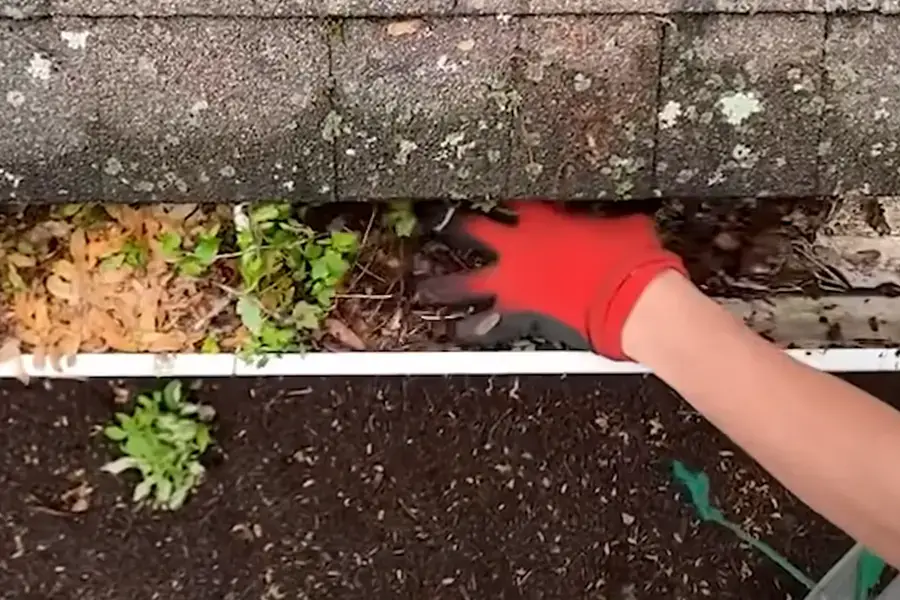
Seeds can settle in wet organic matter and sprout. A plant visible above the lip is evidence that debris has remained long enough to hold moisture. Roots may bind the material and make removal more involved than lifting loose leaves.
Do not yank a large rooted clump from an unstable ladder position. The mass can release suddenly and shift balance. Controlled removal should protect the outlet from receiving the entire plug at once.
Birds and Other Roof-Edge Activity
Twigs at a roof edge may come from storms or animal activity. Avoid disturbing an active nest. Wildlife and nesting questions can require specialized guidance, and the right timing may be controlled by more than the gutter schedule.
Once the area is inactive and lawful to service, remove leftover loose material so it does not wash into the downspout. Blocked guards or displaced components can then be returned to a workable condition.
Clean the Cause, Not Only the Evidence
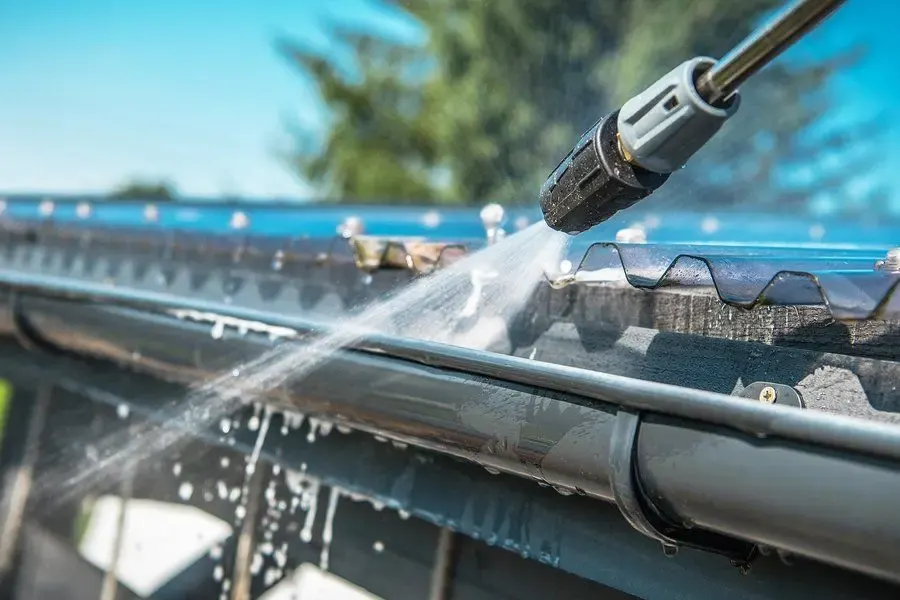
Spraying standing water while leaving the clog does not restore drainage. Removing insects while leaving a sheltered debris pocket does not change the habitat. The physical fix is an open channel with no long-held pool.
The gutter cleaning page describes the route from trough to extension. If the channel remains low or separated after debris removal, use the gutter repair guide to understand the hardware side.
Reduce Future Conditions
Inspect after spring catkins, fall leaves, and twig-dropping storms. Pine needles can create a year-round framework for debris, so heavily exposed roofs deserve observation between the broad seasonal cycles. Keep downspout endpoints clear of leaf piles and mulch.
Guards may reduce large material but can create sheltered surfaces and hidden channels if never opened. Fine debris still needs a route out. A guard should make maintenance more manageable, not make the condition impossible to see.
Safety Comes First
Do not climb when wasps are active near the setup, when the gutter contains unknown animal material, or when a rooted mass requires force. Gloves and eye protection are basic precautions, but they do not solve unstable access or an active nest.
An occasional insect near the roof edge does not automatically mean the gutter needs cleaning. Look for the drainage evidence too: standing water, visible debris, slow outlets, or overflow. Address the physical condition that is actually present and leave a clear system alone.