The Gutter Is Only the Upper Half
A clean gutter can move every drop off the roof and still send that water to the wrong place. The downspout, extension, and surrounding grade finish the drainage route. Around Greensboro, red clay makes that lower half especially visible because wet ground can shed water along the surface.
When a downspout empties into a low bed beside the wall, concentrated flow may pool near a foundation or crawl-space edge. When an extension points uphill, water can turn back toward the house. Solving the roof-edge clog without watching the ground route leaves the job unfinished.
Why Concentrated Water Behaves Differently
Rain falling across a yard is spread over a broad area. A roof gathers water from a much larger surface and focuses it through a handful of downspouts. The discharge at each endpoint is therefore more concentrated than ordinary rainfall on the same patch of soil.
Clay that is dry at the surface may accept some water at first. During a long soaking event, the surface can begin carrying flow. Small grade changes, bed borders, and compacted paths determine where it travels. A low point beside the structure becomes the collection area.
This mechanism is why downspout extensions earn attention. Their purpose is not cosmetic. They move concentrated discharge to a location where it can continue away from the house.
Check the Endpoint, Not Just the Connection
An extension can be securely attached and still fail to release water. Mulch may cover the opening. Grass can grow around it. A mower or footstep may crush a lightweight section. Leaves can pack into an upward bend.
Look at the entire piece from the elbow to its endpoint. Keep the opening visible. During an ordinary rain, observe from the ground whether water exits freely and continues away. Do not wait for severe weather or stand in a lightning storm to investigate.
Splash marks, a groove through mulch, and a recurring wet patch are useful clues. They show where the water has been moving even after the surface begins to dry.
Overflow Creates a Second Ground Problem
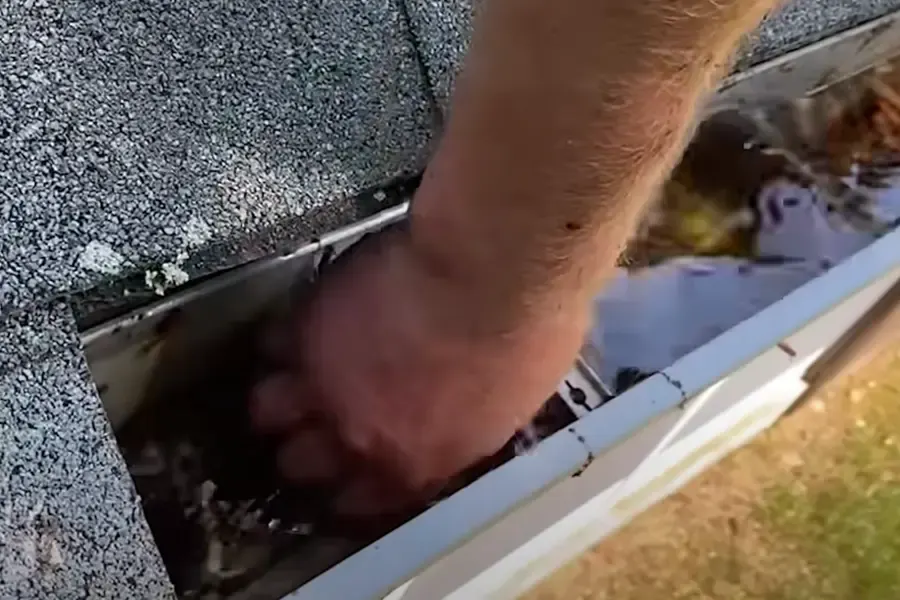
A clogged gutter adds water at places that were never selected as discharge points. Overflow may fall beside a foundation, into a window well, or onto a narrow planting bed. Water leaking behind a run can also track down the fascia and wall before reaching the soil.
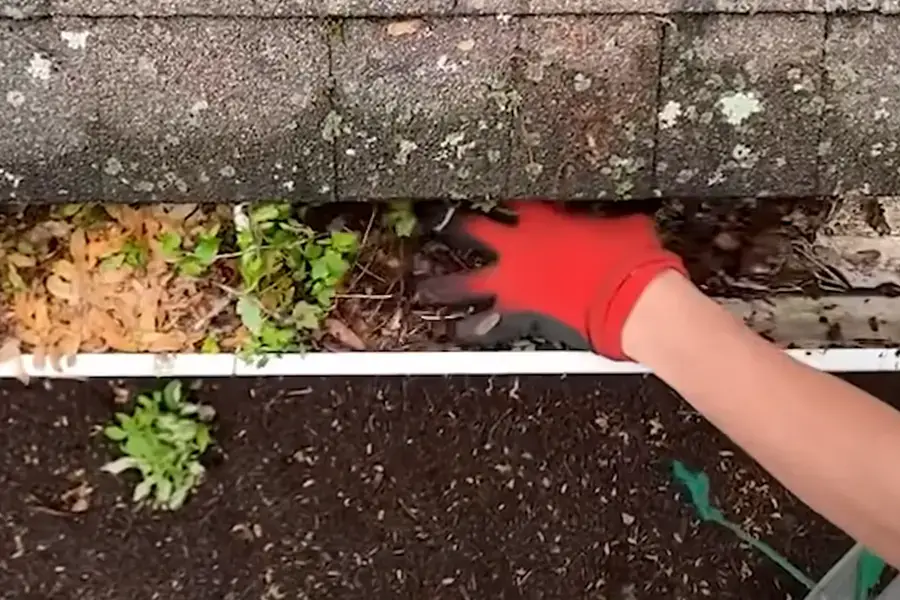
Clear the gutter and downspout first, then reassess the ground. If overflow stops but pooling continues at the extension, the lower route still needs adjustment. If the clean gutter leaks at a joint, repair work may be part of the solution.
Work With the Existing Grade
Extensions should not create trip hazards across walks or drive areas, and they should not direct water onto neighboring property or an unstable slope. The practical route depends on the individual lot. Sometimes repositioning a removable extension is enough. More involved drainage changes may require a specialist beyond routine gutter service.
The key is to avoid burying the symptom. Covering an outlet with more mulch or directing it into an unseen low spot makes inspection harder. Visible, accessible endpoints are easier to keep open.
A Ground-Level Maintenance Routine
Walk each downspout during dry weather and reconnect loose joints. Remove leaf piles from extension ends. After spring catkins and fall debris, verify that water can reach the outlet above. Following a long rain, look for standing water beside the building and note which discharge serves that area.
Do not assume every damp spot comes from a gutter. Plumbing, grading, and other site conditions can also be involved. The gutter system should be evaluated for the route it controls: roof edge to downspout endpoint.
If the source remains uncertain, observe when the dampness appears. A spot that develops only during roof runoff suggests a different investigation from one that stays wet through dry weather. Avoid claiming a gutter fix will solve moisture that has another cause.
Red clay does not make drainage impossible. It makes a clear, intentional water route more important. Keep the upper channel open, maintain the lower extension, and watch where concentrated water actually goes.