A Cleaning Should Address Drainage
Professional gutter cleaning is more than removing the handfuls visible from the driveway. The purpose is to reopen the route from roof edge to downspout discharge and identify obvious conditions that cleaning cannot correct.
The exact method varies with building height, roof shape, guards, grade, and debris. A one-story straight run on level ground is a different project from a tall rear eave above sloping red clay. A useful quote begins by recognizing that difference.
Property and Access Review
Before work, the roofline and ground conditions should be considered. Important details include overhead wires, steep side yards, soft beds, fragile surfaces, roof valleys, and the location of every downspout. Gates, equipment, and landscaping may affect how a ladder can be positioned.
Homeowners can help by describing active leaks and pointing out the corners that overflow. Photos or observations from rain are useful, but nobody should climb during weather to obtain them.
Removal of Channel Debris
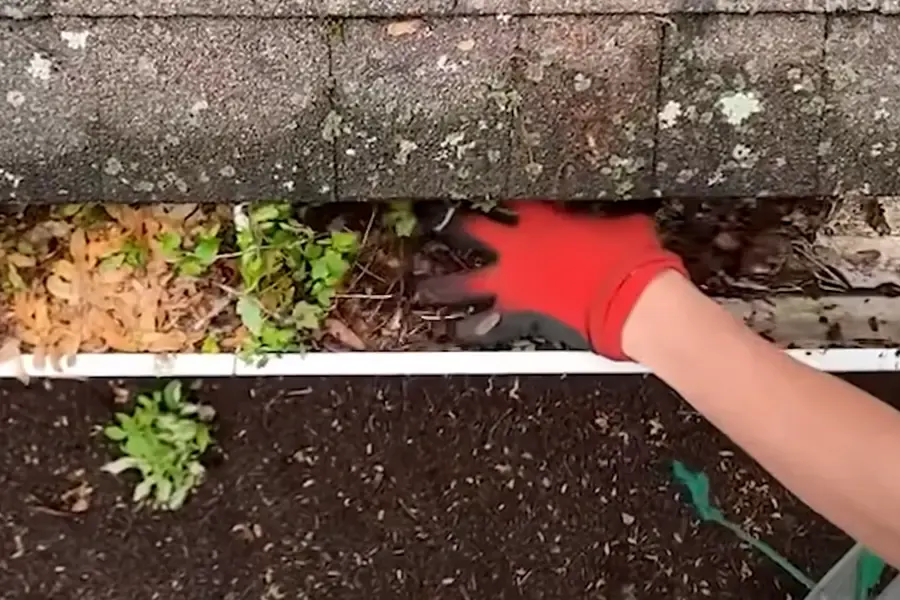
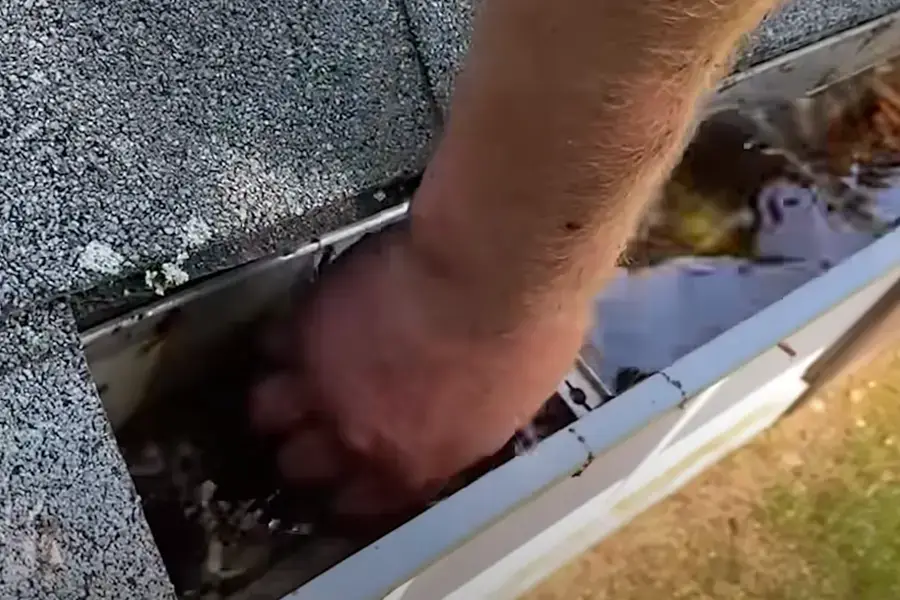
Leaves, pine needles, catkins, twigs, and roof grit are removed from the accessible trough. The material should not simply be pushed into the outlet. Broad upper layers often hide a denser needle-and-pollen mat below, so the gutter bottom needs to be uncovered enough to understand the flow path.
Roof valleys directly above the gutter may hold loose material that will wash down during the next storm. Whether that material is included depends on safe access and the agreed scope. Aggressive roof methods should not be assumed as part of ordinary gutter cleaning.
Outlet and Downspout Check
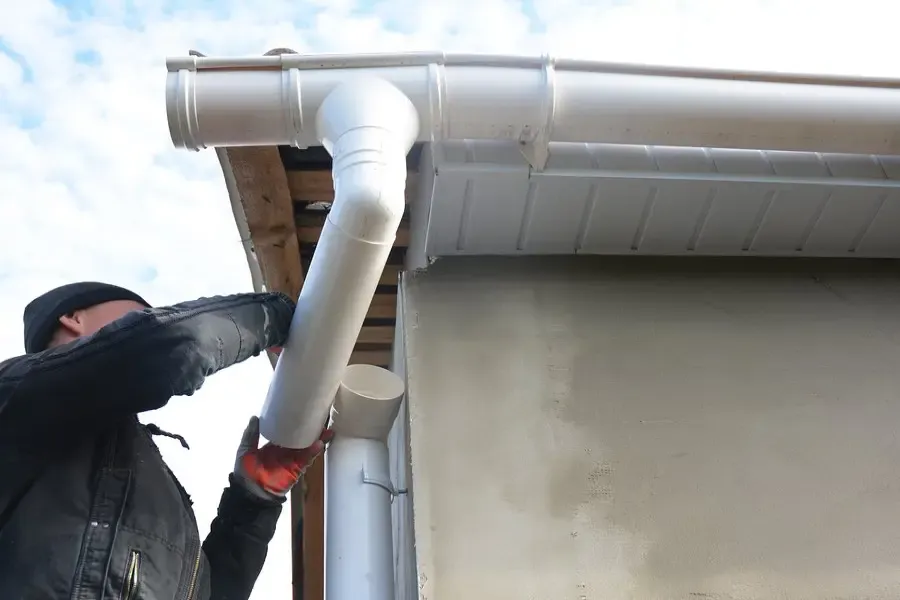
The top of the downspout is a common clog point. Oak catkins bend around the opening, and pine needles form a frame that captures leaf fragments. Clearing the visible channel without opening that transition leaves the main restriction in place.
The vertical downspout and elbows should have a usable path. A hidden plug may require a different approach from the open trough. The lower extension also matters. It should be connected, uncrushed, and open at its endpoint.
Observing the Empty System
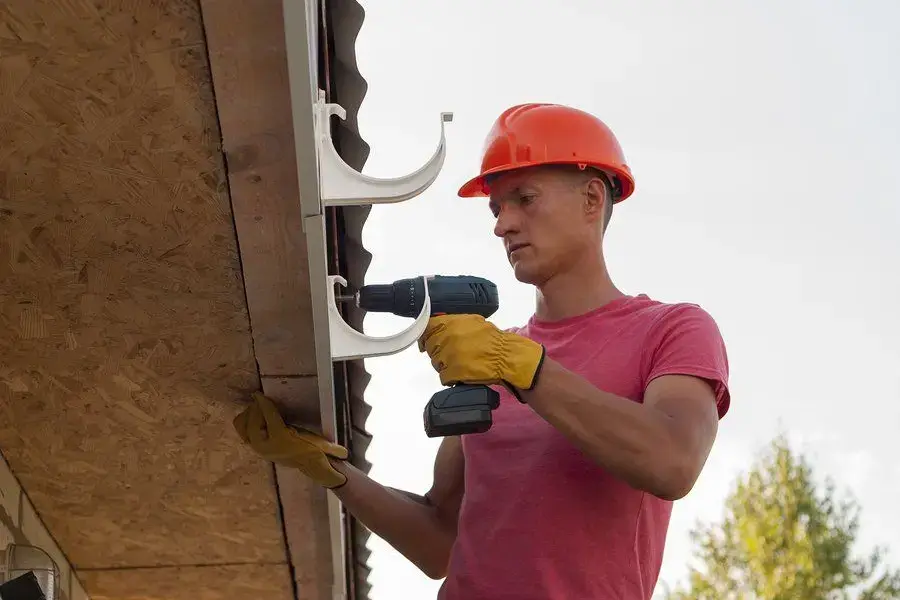
Once debris is gone, obvious low spots, separated seams, loose hangers, and damaged connections are easier to see. Cleaning does not repair those conditions, and a cleaner should not pretend otherwise.
Standing water in an otherwise empty run suggests pitch or support trouble. A joint that continues to release water may need dry-surface repair. A bent section or shifted elbow should be discussed separately. The gutter repair page explains the distinction between a local fix and a broader replacement question.
Site Cleanup and Communication
The homeowner should understand what was cleared and whether a remaining issue affects flow. If a downspout could not be opened, a roof section was inaccessible, or a repair is recommended, that limitation should be stated plainly.
Ask where removed debris will go and whether any ground-level cleanup is included. Do not assume a scope that was never discussed. A clear quote should define the accessible runs, guards, downspouts, and any roof-edge debris involved.
Communication also includes what was not disturbed. Roofing materials, fixed guards, underground drains, and damaged components may sit outside a basic cleaning. Clear boundaries make it easier to arrange the right follow-up without confusing it with the debris removal already completed.
When No Cleaning Is Needed
A professional assessment can conclude that the gutter is already open. Visible gutter bottom, an unblocked outlet, and steady downspout flow are good reasons to wait. Selling unnecessary cleaning does not improve drainage.
Guards may also change the work. Surface debris can sometimes be cleared without opening every panel, while internal material may require access beneath the cover. The design and condition determine the task.
Questions to Ask
- Are downspouts and extensions included in the flow check?
- How will guards be accessed without damage?
- Are roof valleys part of the agreed scope?
- What happens if a seam or low spot appears after cleaning?
- Are any areas excluded because access is unsafe?
The Greensboro cleaning service guide provides more detail about local debris. A good professional cleaning leaves an understandable result: the route is open, or the remaining limitation is clearly identified.