Long Rain Tests Different Weaknesses
A summer thunderstorm tests how quickly a gutter can move water. Rain associated with a tropical system may test how long it can keep moving. A small outlet restriction has time to back up. A weak seam remains wet. A poor downspout endpoint sends concentrated water into the same red-clay pocket for an extended period.
Preparation helps, but timing matters. Gutter work should happen while weather is calm and the ground is dry, not when outer bands begin moving across the Triad. Wind, wet ladders, and dropping branches turn a drainage task into a hazard.
Start With Ground-Level Checks
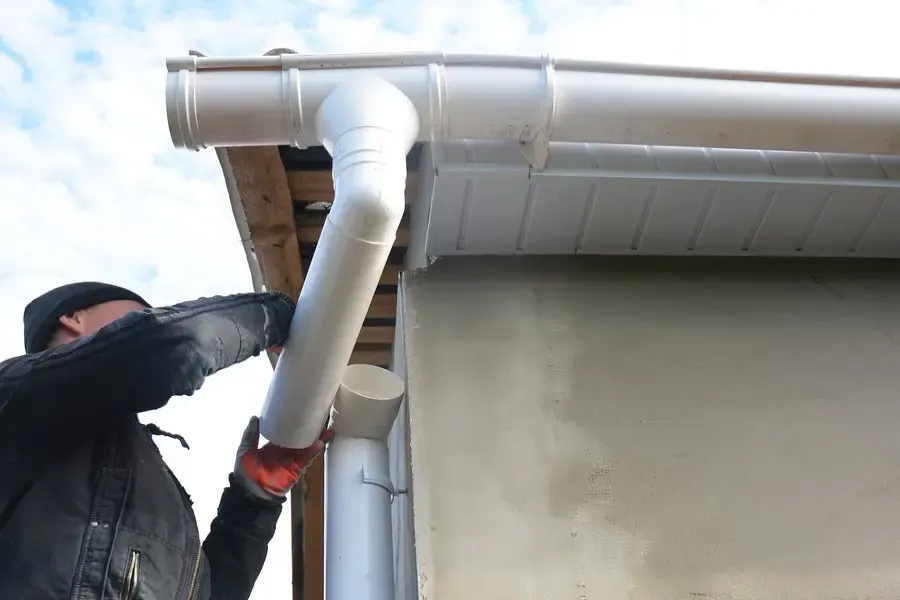
Walk around the house before conditions deteriorate. Confirm that downspout extensions are connected, open, and pointed away from the structure. Remove loose leaf piles from their endpoints. Check that portable objects will not blow into the lower sections.
Look up from a safe position. Visible plants, debris above the lip, a shifted guard panel, or a low gutter line justify closer attention in good weather. Roof valleys holding twigs and leaves can release that pile as the rain begins.
If ordinary rain occurs well ahead of the system, observe which downspouts flow and where the water travels. Do not wait for severe conditions to perform the test.
Clear the Outlet, Not Just the Surface
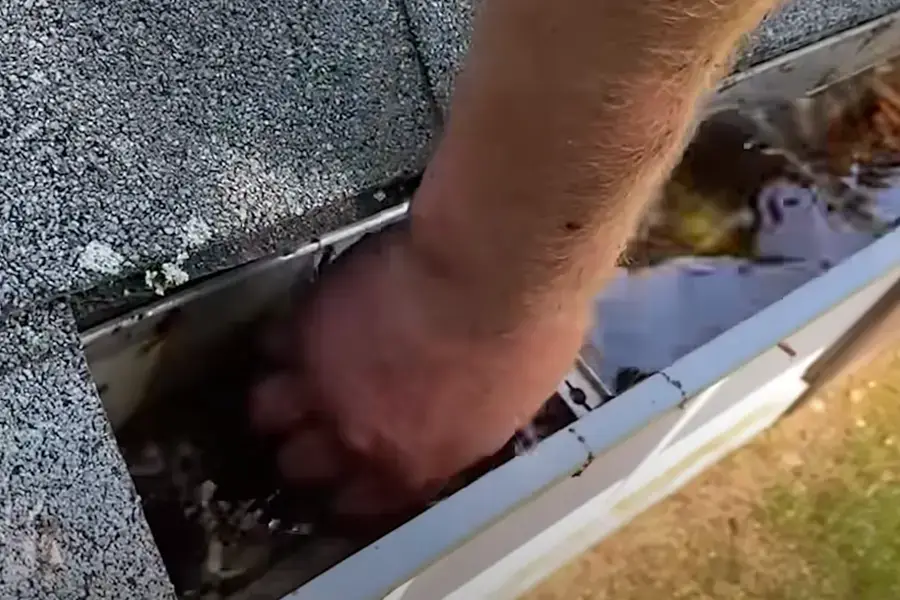
Pine needles, oak catkins, and leaf fragments often gather at the top of the downspout. A gutter may appear half empty and still have very little exit capacity. Preparation should uncover the channel and restore that opening.
The lower path matters too. An elbow can hold a compact plug, especially where needles form a framework for fine debris. If the downspout cannot be cleared with controlled access, do not force tools into unseen turns or climb as the weather approaches. Use gutter cleaning help early enough to avoid the rush.
Review Valleys and Roof Debris
Valleys concentrate rain from two roof planes. Leaves and twigs resting there may wash into one short gutter section. Removing loose roof debris before the final channel check can prevent immediate refilling.
Roof access should never be casual. Pitch, damp pollen film, service lines, and uncertain roofing condition can make a seemingly small pile unreachable. The roof cleaning guide explains when loose debris work fits the gutter problem and when staying down is wiser.
Follow Water Over Red Clay
Long soaking rain can saturate surface soil and send additional water along the grade. An extension that works acceptably in a short shower may create a persistent pool during an extended event. The endpoint should not aim toward a crawl-space opening, low bed, or foundation corner.
Do not make major drainage changes without understanding where the redirected water will go. The immediate goal is an open, visible discharge route away from the building. More involved grading or underground drainage questions may require another specialist.
During the Weather
Stay off ladders and roofs. Keep people away from active overflow, loose gutters, and tree limbs. If water spills, note the location from inside or a protected area. A video or photo taken safely through a window may help document the behavior.
Do not disconnect sections while water is moving. A downspout carries concentrated flow, and opening it unexpectedly can release debris and water at once.
After the Rain
Allow the roof and soil to dry. Then look for new twig piles, disconnected elbows, sagging sections, and erosion at discharge points. A clean gutter that changed line under the storm may need repair. Water stains beneath a joint can identify where the system remained full.
Not every tropical-system remnant causes damage, and not every property needs cleaning before one arrives. If the gutter and outlet are already open, focus on extensions and loose ground debris, then leave the system alone.
Good preparation is early and restrained: clear known restrictions, keep water moving away, and never trade a possible overflow for a last-minute fall risk.