Newer-Looking Gutters Still Need a Flow Check
A clean exterior does not guarantee an open drainage path. A Whitsett home with several gables and short roof valleys can send leaves, shingle grit, and pine needles toward compact gutter sections. The run may look tidy from the driveway while its outlet holds a catkin plug.
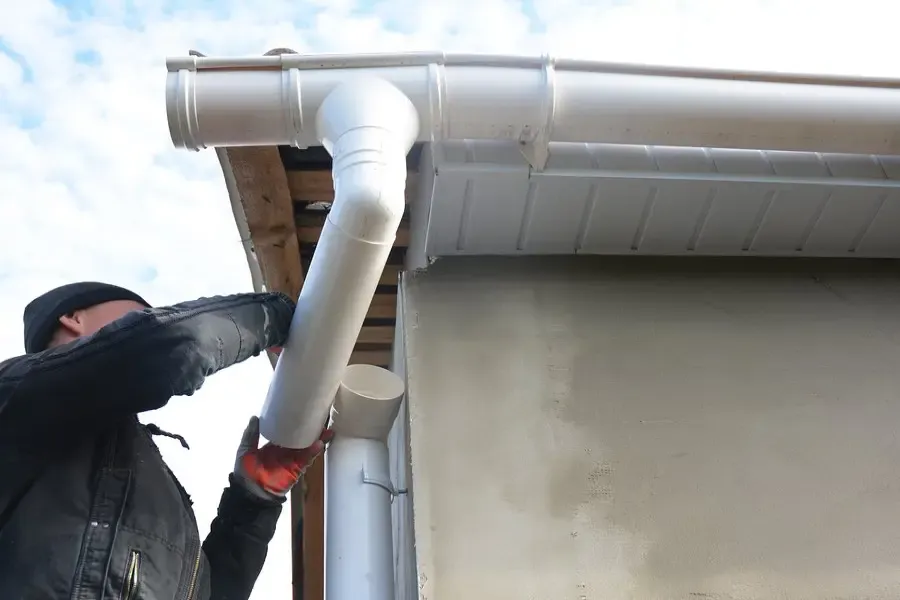
New landscaping can also hide the lower problem. Downspout extensions disappear beneath shrubs, mulch, or groundcover, and their endpoints become difficult to inspect. Water needs a clear route both above and below, so a gutter check should continue to the discharge point.
Multi-Plane Roofs Concentrate Debris
Each valley collects material from two roof planes. Dry leaves stop in the crease, needles lock them together, and the next rain carries the pile toward one narrow section. If that point sits above a front bed or walkway, overflow may be mistaken for a general capacity issue when the restriction is actually local.
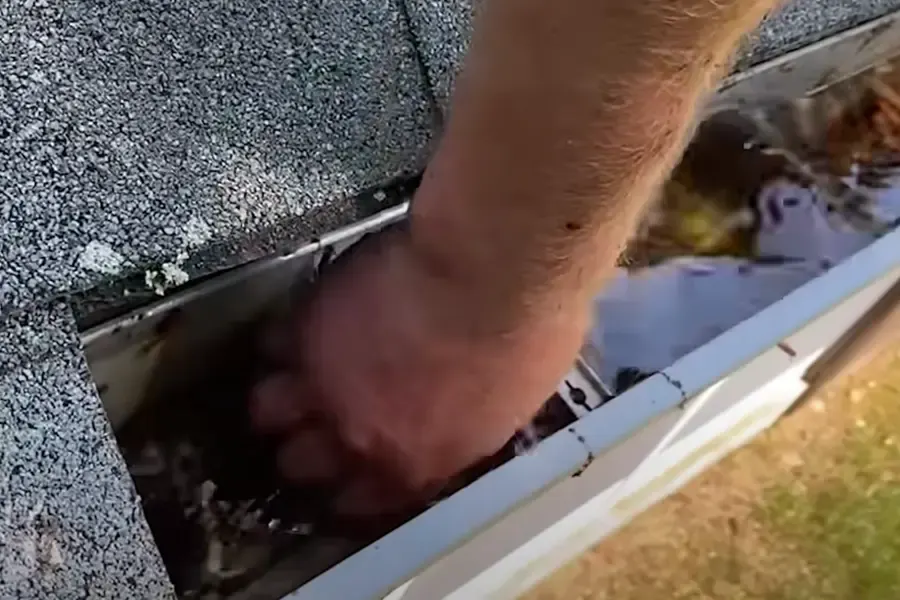
Spring catkins create smaller plugs. They bend around outlet edges and combine with the yellow-green pollen film familiar across the Piedmont. Roof grit settles below them. Removing only the broad leaves leaves the denser layer behind.
During a hot-season thunderstorm, water reaches valleys quickly. Observe the roof edge from a protected location and note the exact corner where water escapes. Do not climb in rain to confirm it. Once conditions dry, that location provides a useful starting point for cleaning or repair.
Pay Attention to Construction Debris and Grit
Any roof can release granular grit over time, and nearby landscape or exterior projects may introduce small fragments to the channel. Fine material settles in low spots even when the downspout remains partly open. A shallow layer slows water and holds organic debris longer.
Cleaning should expose the gutter bottom so pitch can be evaluated. A clean run that retains a broad pool may need hanger or alignment attention. A seam that drips after debris is gone points toward repair rather than repeated scooping.
Discharge Across Whitsett Clay
Red clay around a graded lot can direct water in unexpected ways. A downspout extension may release onto a surface that slopes back toward the house or creates a wet pocket near a slab edge or crawl space. Follow the route during ordinary rain from the ground.
Keep extensions connected and their endpoints clear. Mulch piled over the opening, mower damage, or a tight bend can slow discharge. The right upper cleaning cannot compensate for a crushed lower path.
Do Guards Fit the Debris?
Guards may reduce broad leaves, but pine needles control the selection. Open screens let many slender pieces through. Micro-mesh rejects smaller debris while collecting pollen and film on top. Valleys remain high-flow points under either style.
An easy-to-reach, lightly exposed gutter may not need a cover. Periodic observation and cleaning only when restricted can be simpler. Read the screen and mesh overview before treating a new-looking system as an automatic upgrade candidate.
Request a Whitsett Quote
Call (336) 530-1911 or use the contact page. Share the number of roof levels, valley locations, nearby tree types, and where the downspouts finish. Photos from grade are useful when a corner overflows or an extension vanishes into landscaping.
If every run is open and water reaches a suitable discharge point, cleaning can wait. Service should follow the condition of the system, not its age or appearance.